
By StudioX Harnaik | March 5, 2026 | Updated at 5:09 PM IST
Apple has quietly reshaped its pricing playbook. While the tech giant kept iPhone and iPad costs steady, it raised MacBook prices across the board — a move shaped by a widening global memory shortage that’s impacting nearly every major electronics brand.
A Tale of Two Lineups
Apple introduced the new iPhone 17e and M4-powered iPad Air, both starting at the same $599 base price as last year. The familiar pricing reassures consumers wary of inflation and tech-sector volatility.
But Mac buyers saw a different story unfold. The 13‑inch MacBook Air climbed to $1,099 (up from $999), and the 15‑inch Air jumped to $1,299 (up from $1,199). The new M5‑based MacBook Pro line went higher still: the 14‑inch Pro now starts at $2,199, while the 16‑inch M5 Max model tops $3,899 — a $400 leap over 2025 prices.
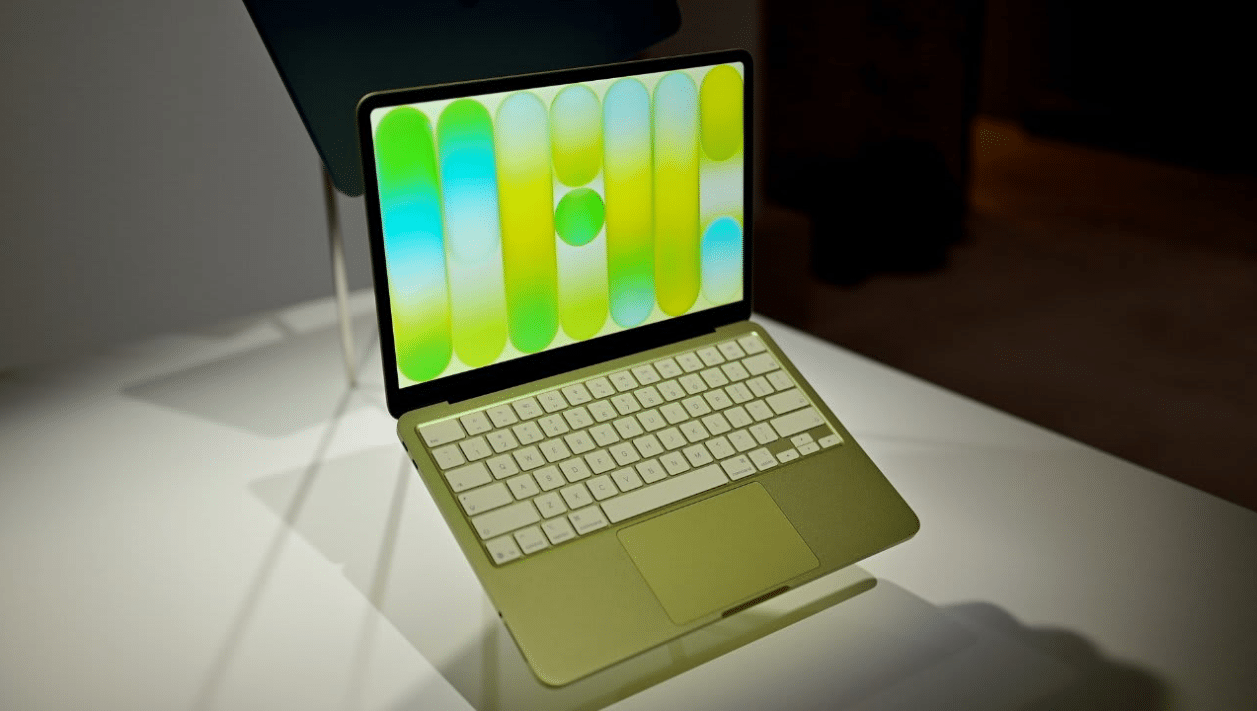
Apple justified the increase by doubling base storage (now 512GB on Air and 1TB on Pro) and introduced a fresh entry‑level model, the MacBook Neo, starting at just $599 — its first sub‑$1,000 laptop since 2016.
Memory Crisis Hits the Industry
Behind the scenes, the AI boom is straining global memory supply. Data centers expanding for generative AI workloads have pushed up DRAM, NAND, and HBM prices sharply.
Silicon Motion CEO Wallace Kou warned this year that “HDD, DRAM, HBM, NAND — all are in severe shortage in 2026.” data shows DRAM prices rising 47% through 2026, with memory now representing 23% of total PC material costs, up from 16% last year.
Samsung Electronics raised DDR5 prices by 60% while confirming its flagship Galaxy S26 saw a $100 price uptick partly due to memory constraints. Competitors including Dell, HP, Lenovo, Acer, and ASUS have since followed suit, passing on higher costs to buyers.
Apple’s Balancing Act
Apple’s selective pricing strategy reflects careful market calibration. CEO Tim Cook previously hinted at “increasing market pricing for memory” but stayed ambiguous about retail adjustments.
By keeping prices flat on consumer devices (iPhone and iPad) while marking up high‑end Macs, Apple is clearly shielding volume products from the impact of global component costs — focusing increases where professional buyers are more likely to absorb them.
Retailers are also bracing for tight supply. Best Buy CEO Corie Barry confirmed that the company is “bringing in as much inventory as possible in coordination with memory suppliers” to stay ahead of what’s shaping up to be one of the tightest component markets since 2020
Apple’s $599 MacBook Neo goes on sale today
Apple officially launches the MacBook Neo on Wednesday, its most affordable laptop ever, as the company makes an aggressive play for budget-conscious consumers and students with a $599 machine powered by an iPhone chip. Several color and storage configurations have already sold out during the pre-order period that began March 4, with delivery estimates for some models now stretching into late March

Harnaik Singh Rathor is the Founder, Publisher, and Editor-in-Chief of StudioX News Canada, Canada's multilingual digital news network serving diaspora communities across 44 languages. With a background in media production, public relations, and multicultural communications, he founded StudioX Film and TV Corporation to bridge the gap between mainstream Canadian media and the country's diverse immigrant communities. He is a member of the Canadian Association of Journalists (CAJ), RTDNA Canada, CPRS Vancouver, Unifor, NEPMCC, and the Canada Freelance Union. Based in Surrey, British Columbia. | LinkedIn: https://www.linkedin.com/in/harnaiksinghrathor/ | Muck Rack: https://muckrack.com/harnaiksinghrathor | Email: editor@studioxnews.ca