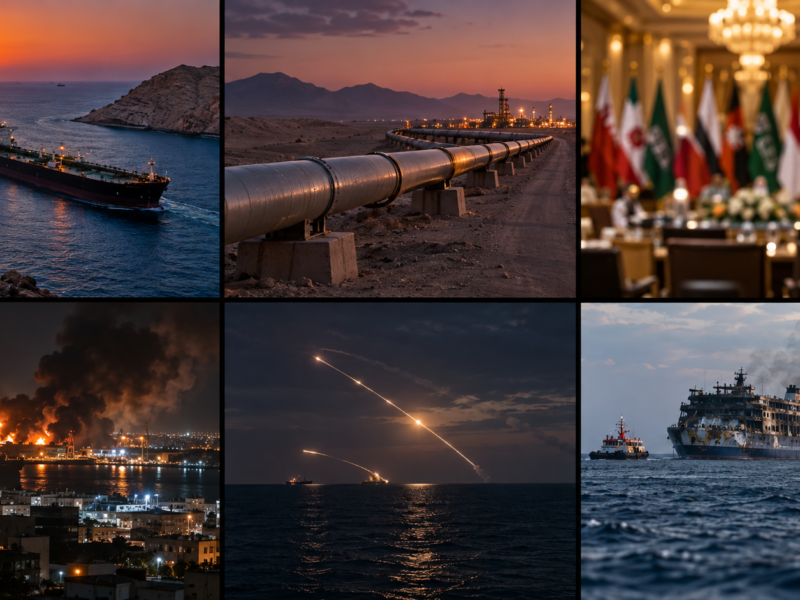
The US Iran strikes Hormuz conflict has entered a dangerous new phase this week. Washington has widened its air campaign into northern Iran, and Tehran has responded with missile and drone attacks on American-linked sites across the Gulf region. Both sides show no sign of backing down, and the world is watching closely.
For Canadian readers watching global energy markets, this escalation matters directly. A prolonged shutdown of Strait of Hormuz shipping routes could push fuel prices higher at home, even though Canada sources most of its oil domestically. Rising Brent crude prices tend to ripple through North American markets regardless of where the oil is produced.
Table of Contents
- What Happened in the Latest Escalation
- Iran’s Retaliation Across the Region
- Why the Strait of Hormuz Matters
- Global Oil Market Reaction
- What Comes Next
What Happened in the Latest US Iran Strikes Hormuz Campaign
US Central Command confirmed that American forces struck coastal defense sites, missile installations, and Greater Tunb Island. Strikes also hit a barracks belonging to Iran’s 388th Mechanized Infantry Brigade in Sistan and Baluchestan province. Officials say the operation marks one of the broadest waves of action since fighting resumed earlier this year.
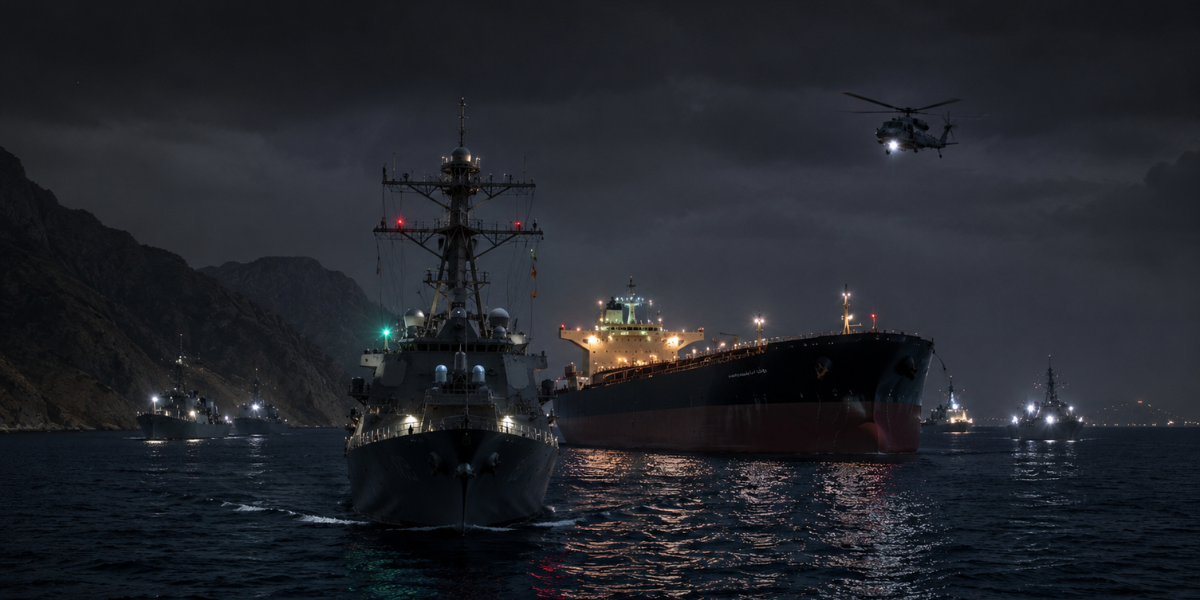
Separately, American forces fired Hellfire missiles into the smokestack of the tanker Belma after the vessel ignored repeated warnings while heading toward Kharg Island, Iran’s main oil export terminal. According to Iranian officials, more than 35 people have died and over 300 have been wounded in this latest round of the US Iran strikes Hormuz campaign.
- Strikes expanded into northern Iran near Tehran for the first time this round
- Greater Tunb Island and Semnan missile sites were targeted
- Tanker Belma disabled for breaching the naval blockade
- Iranian officials report the highest casualty count of the current phase
Iran’s Retaliation Across the Region
Iran answered before dawn with missile and drone strikes aimed at US-linked positions in Bahrain, Jordan and Kuwait. No major casualties were reported from those attacks. However, a drone aimed at Irbil in Iraq’s Kurdish region was intercepted before impact, avoiding what could have been a serious escalation on a fourth front.
Iraqi Prime Minister Ali al-Zaidi condemned the Irbil incident during an official visit to Washington. Meanwhile, Bahrain, Jordan and Kuwait have not issued formal statements detailing damage, though regional security officials remain on high alert.
Regional Response to the Hormuz Blockade
Iranian Parliament Speaker Mohammad Bagher Qalibaf warned that Tehran remains ready for broader confrontation if Washington does not honor earlier understandings. Meanwhile, Revolutionary Guard officials suggested that energy exports across the wider region could face disruption if pressure continues. This rhetoric has raised concern among neighboring Gulf states that rely heavily on stable shipping lanes.
Why the Strait of Hormuz Matters for Global Trade
Roughly a quarter of the world’s seaborne oil normally moves through the Strait of Hormuz, making it one of the most strategically important waterways on earth. Since the blockade resumed on July 15, shipping traffic has dropped sharply, and several vessels have shifted toward a US-monitored route near Oman to avoid the conflict zone entirely.
CENTCOM has confirmed it has redirected dozens of commercial ships this year to enforce compliance, according to official CENTCOM operational updates. The command has also disabled multiple non-compliant vessels attempting to reach Iranian ports in recent months, underlining how tightly the blockade is now being enforced.
Global Oil Market Reaction to the Conflict
Brent crude climbed above $85 a barrel following the latest strikes. Analysts say prices could rise further if hostilities spread beyond the current flashpoints. Consequently, energy traders worldwide are watching the situation hour by hour, since even a short disruption to Hormuz traffic can move markets significantly.
The current fighting traces back to earlier 2026 hostilities that began with joint US-Israeli action and a temporary Iranian closure of the strait. An interim agreement had briefly reduced tensions until recent attacks on commercial shipping collapsed the arrangement. For more background on the origins of this conflict, read our earlier coverage of the Iran leadership crisis and Trump’s remarks on StudioX News.
Conclusion: What Comes Next
The US Iran strikes Hormuz standoff shows no sign of slowing down. President Trump has hinted that Iran may want to settle, though he added that Washington alone will decide whether to negotiate or continue the campaign. Meanwhile, global markets and regional governments remain on edge as both sides keep operations active.
Given how quickly the situation has shifted in recent weeks, further developments in the US Iran strikes Hormuz crisis appear likely in the days ahead. Analysts advise close monitoring of oil prices and shipping activity as the clearest early signals of what happens next.

I am Rukaiya Kadiwala, an experienced News Content Writer with 6+ years of expertise in hospitality, travel, hotel, restaurant, business, and lifestyle news. Skilled in writing, research, fact-checking, headline creation, and digital publishing, I create accurate, engaging, and high-quality content that informs and attracts readers worldwide.