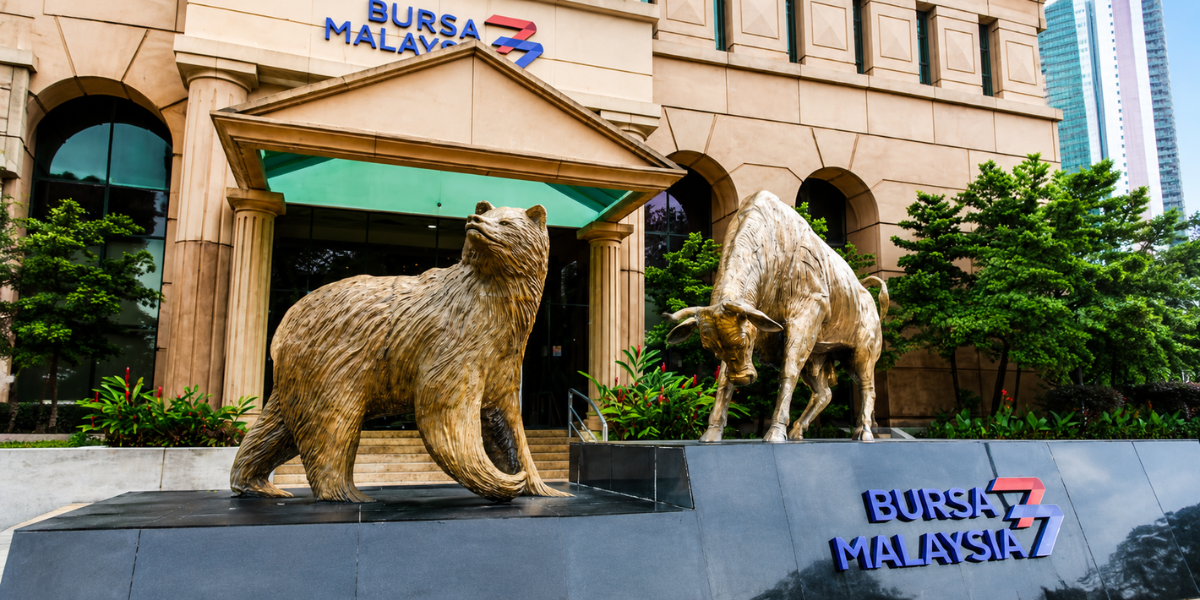
Malaysian shares fall on Friday, July 24, as investors weighed the latest round of tariffs from U.S. President Donald Trump alongside a surge in oil prices amid escalating geopolitical conflicts, according to The Edge Malaysia. The benchmark FBM KLCI declined 13.57 points, or 0.79%, to close at 1,701.02, with 27 of its 30 constituent stocks ending the day in negative territory.
Press Metal Aluminium Holdings Bhd was the biggest loser on the index, falling 2.4% to RM7.86, the report said. Most sectoral indices on Bursa Malaysia traded lower, led by the telecommunications and media index, which declined 1.7%. Transportation firms, plantation stocks and real estate investment trusts were among the few segments to advance during the session.
The market moves came after the United States imposed tariffs of between 10% and 12.5% on around 60 economies, following Section 301 investigations into forced labour practices. Malaysia’s tariff rate remained at 10% under the latest trade measures, according to The Edge Malaysia.
Despite the new trade measures, analysts largely played down the potential damage from the tariffs, saying investor attention was more focused on geopolitical developments and energy prices. An analyst at RHB Investment Bank said the latest tariff announcement left Malaysia’s rate unchanged, describing it as a continuation of the existing trade regime rather than a fresh escalation. The analyst also pointed to exemptions for certain Malaysian exports, particularly electrical and electronics products and goods related to artificial intelligence, the report said.
Brent crude, the global benchmark for oil, rose back above US$100 (RM408.56) per barrel amid a widening conflict in the Middle East, according to The Edge Malaysia. Asian stock markets more broadly were also affected following reports that Yemen’s Houthi rebels had attacked Saudi ships in the Red Sea, raising concerns about a potential new disruption to oil and gas supply routes already under pressure from the closure of the Strait of Hormuz.
The report noted that the tariff announcement forms part of a broader package of measures targeting economies the U.S. has flagged over forced labour enforcement, with rates varying between 10% and 12.5% depending on the classification applied to each country. Malaysia’s 10% tariff rate was cited by analysts as a key reason the tariff news had limited additional impact on sentiment compared with the oil price surge. Similar measures were also applied to other economies in the region, including a related 12.5% levy on Australia.
The decline in Malaysian equities also reflected broader caution across Asian markets as investors assessed the combined impact of trade restrictions and higher energy costs. Rising crude oil prices can increase operating and transportation expenses for businesses, while prolonged geopolitical uncertainty may affect investor confidence and market sentiment. For Malaysia, the movement in global oil prices is particularly significant because energy-related developments can influence inflation expectations, corporate earnings and the country’s broader economic outlook.
Investors are also watching developments in the technology and manufacturing sectors, particularly because Malaysia is an important regional hub for electrical and electronics production. Any changes to tariff exemptions or trade policies affecting these industries could influence the performance of export-oriented companies. Analysts are therefore expected to continue assessing whether the latest U.S. measures will have a lasting effect on Malaysian exporters or remain largely manageable under the current tariff structure.
At the same time, the rise in oil prices has increased attention on the potential impact of supply disruptions in key shipping routes. Market participants are closely monitoring developments around the Red Sea and the Strait of Hormuz, as any prolonged disruption could place further pressure on global energy markets. The combination of trade uncertainty, elevated crude prices and geopolitical tensions is likely to remain a key factor shaping investor sentiment across Asian markets in the near term.
Market participants in the region are expected to continue monitoring both the trade measures and developments in the Middle East conflict for further signals on energy prices and investor sentiment in the sessions ahead.

I am Rukaiya Kadiwala, an experienced News Content Writer with 6+ years of expertise in hospitality, travel, hotel, restaurant, business, and lifestyle news. Skilled in writing, research, fact-checking, headline creation, and digital publishing, I create accurate, engaging, and high-quality content that informs and attracts readers worldwide.