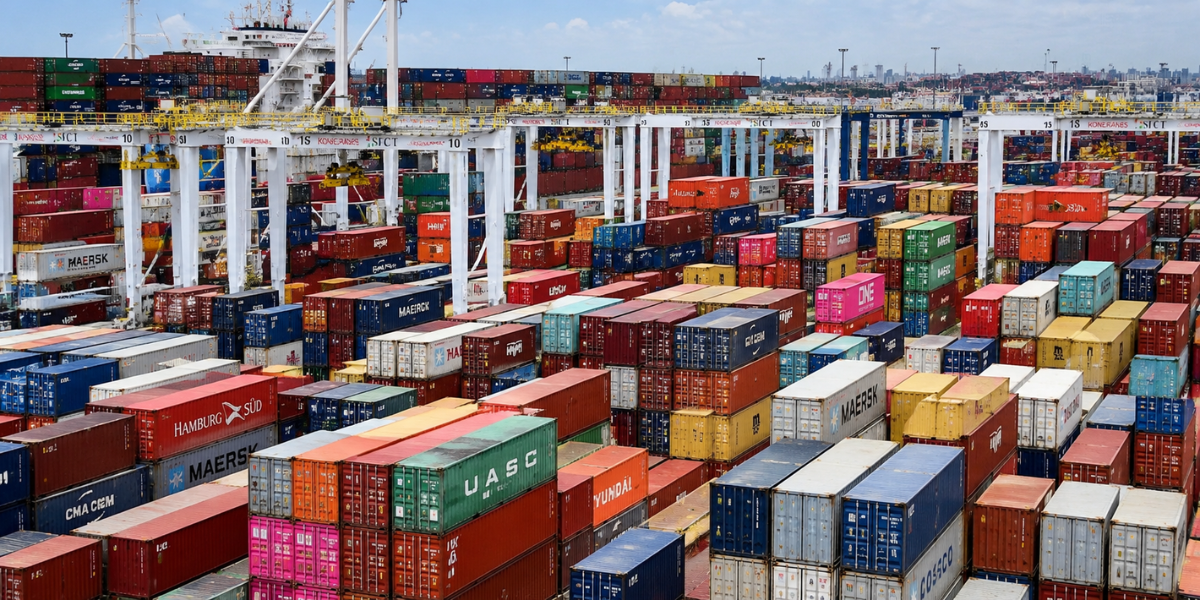
The new Trump Australia tariffs took effect after the United States announced on Friday that many Australian exports would face a 12.5% levy as part of a wider tariff regime covering dozens of countries, according to the Guardian. The Albanese government has demanded the tariffs be removed immediately, arguing they are unjustified and inconsistent with the Australia-US free trade agreement.
The U.S. trade department said Australia was among 54 economies it deemed to have “failed to impose and effectively enforce a prohibition on the importation of goods produced with forced labor.” Other countries facing the same 12.5% tariff include Brazil, China, Egypt, Israel, Japan, New Zealand, Norway, Russia and Singapore, according to the Guardian’s report. A separate group of economies, including the UK, India, Indonesia, Canada and Mexico, will face a lower 10% tariff after the U.S. said they had only failed to “enforce” existing forced labour prohibitions.
The Albanese government said Australia’s three largest export categories, including beef and gold, would avoid the tariff hit. Trade minister Don Farrell said Australian measures to combat forced labour and modern slavery were “among the strongest in the world” and called for the tariffs to be scrapped. “These tariffs are unjustified, inconsistent with our free-trade agreement and should be removed,” Farrell said, according to the Guardian.
Farrell also said Australian exports to the U.S. had increased since Trump’s earlier “liberation day” tariffs, and that the country’s biggest exports , beef, gold and copper , were not expected to be affected. Deputy Prime Minister Richard Marles told ABC radio the U.S. action “made no sense,” saying Australia supported the objective of combating forced labour but already had laws that were “amongst the strongest in the world.”
The move follows an earlier threat from the Trump administration after the U.S. Supreme Court struck down Trump’s previous 10% global tariffs. Trump had responded to that ruling by announcing temporary trade sanctions, which were due to expire on the same day the new forced-labour-related tariffs took effect. Australian government sources had previously told Guardian Australia they believed the new tariffs were intended as a replacement for the measures the courts had struck down.
U.S. Congresswoman Linda Sánchez, a California Democrat, criticised the justification for the new tariffs, writing on social media that Trump was “trying to make an end-run around the Supreme Court and Congress to reimpose his illegal tariffs.” The U.S. Trade Representative‘s trade action document states that the country has adopted and effectively enforced a ban on imports made with forced labor, while calling on trading partners to join efforts to eliminate forced labour from global supply chains. In total, the tariffs apply to the top 60 U.S. trade partners, covering 99.4% of U.S. imports, according to the statement.
Domestically, the tariffs drew criticism from the opposition. Shadow trade minister Matt Canavan said the Albanese government had “failed” exporters by not securing lower tariffs comparable to the UK or Canada, noting Australia was now subject to the same 12.5% rate as Russia, China and Venezuela. He said the government had “failed to take meaningful action against forced labour in international supply chains, despite years of warnings.”
The new tariff measures apply to goods entering the U.S. from 12:01am U.S. eastern time on 24 July, with exemptions covering beef, agricultural produce, aircraft parts, certain coal, oil, mineral and chemical products, some metal and steel products, timber and machinery. Further diplomatic engagement between Canberra and Washington is expected, with details to be tracked through the Department of Foreign Affairs and Trade as talks continue. The move follows a similar pattern seen elsewhere, including the recently reported Trump 50% tariffs on Canada.

I am Rukaiya Kadiwala, an experienced News Content Writer with 6+ years of expertise in hospitality, travel, hotel, restaurant, business, and lifestyle news. Skilled in writing, research, fact-checking, headline creation, and digital publishing, I create accurate, engaging, and high-quality content that informs and attracts readers worldwide.