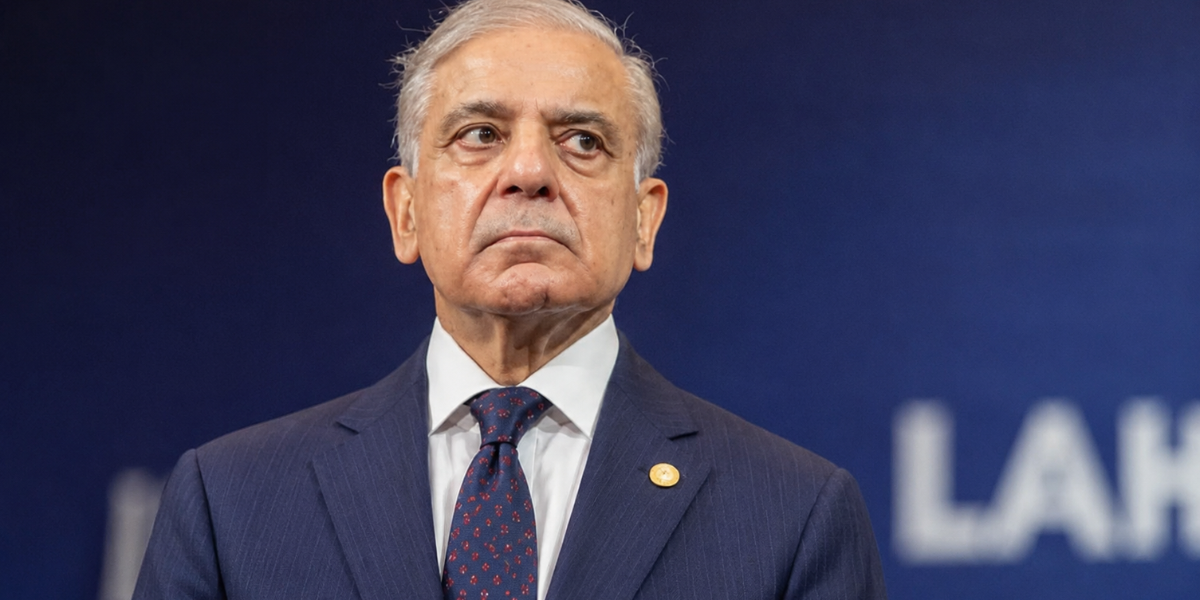

The Pakistan $10 billion US stabilization facility request has been submitted to Washington to help shore up the country’s foreign exchange reserves, according to a source briefed on the matter, following Islamabad’s role in mediating talks over the Iran war, Reuters reported.
The request, made to US Treasury Secretary Scott Bessent, seeks a Bilateral Exchange Stabilization Support Facility worth $10 billion with a maturity of up to five years. If approved, the facility would bolster Pakistan’s reserves, ease pressure on the rupee and reduce the country’s reliance on multilateral financing, even as Islamabad continues tighter fiscal and monetary policies under its IMF program, Reuters said.
The Pakistani finance ministry did not respond to a request for comment outside of Asia business hours, according to Reuters, and the US Treasury declined to comment on the reported request. Pakistani Finance Minister Muhammad Aurangzeb met with Bessent in Washington on Tuesday and raised the vulnerability of the country’s economy to regional geopolitical developments, the ministry said in a statement that did not mention the request for the facility.
The ministry said Aurangzeb sought greater US support for Pakistan’s access to international capital markets, higher foreign exchange reserves and stronger sovereign credit ratings, adding that both sides reaffirmed their commitment to deepening bilateral economic cooperation and advancing strategic projects. Reuters said the statement did not reference the Pakistan $10 billion US stabilization facility request directly.
Exchange stabilization facilities are rare US Treasury backstops, typically financed through the Exchange Stabilization Fund, that provide dollars, swaps or guarantees to help countries steady their currencies. They differ from the Federal Reserve’s permanent standing dollar swap lines with major central banks. A 2025 Argentina package was the first new facility of its kind since Uruguay in 2002, aside from Mexico’s long-standing swap line dating to the 1940s, Reuters reported.
Pakistan remains under a $7 billion IMF Extended Fund Facility that has required tax increases, spending restraint and other reforms. Further detail on the country’s IMF program is available through the International Monetary Fund’s Pakistan page. The country narrowly avoided default in 2023 with a $3 billion IMF standby arrangement and later secured the $7 billion facility, along with a separate $1.3 billion loan for climate resilience, though its reserves still depend heavily on official financing, rollovers and deposits from China and Saudi Arabia.
That dependence was evident in April, when Pakistan repaid about $3.5 billion, roughly a fifth of its reserves, to the United Arab Emirates, while Saudi Arabia provided $3 billion in fresh support, according to Reuters. Pakistan’s central bank said in January that reserves could return to near their 2021 record, reaching $20 billion by the end of 2026.
Ratings agency Fitch said in April that Pakistan’s adherence to its IMF program has supported its funding capacity, while rebuilt foreign exchange buffers offer a cushion against shocks from the Middle East conflict, though the agency cautioned that rising energy costs and possible supply disruptions could erode reserves. Foreign investment in Pakistan has remained thin, Reuters reported, citing recurring external crises, policy uncertainty, security risks, past profit-repatriation curbs and a narrow export base, with the country’s credit rating still deep in speculative-grade territory.
Pakistan has increasingly sought to use its ties with the Trump administration to address some of these constraints, with economic cooperation spanning crypto, real estate and mining, according to Reuters. Islamabad has signed a stablecoin agreement for cross-border payments with an affiliate of World Liberty Financial, the main crypto business of President Donald Trump’s family, according to Reuters, and has pursued a memorandum of understanding to redevelop the closed Roosevelt Hotel in New York. It has also courted US mining investment, including at the Reko Diq project, where the US Export-Import Bank has announced $1.25 billion in financing.
While IMF-backed reforms have helped stabilize the economy by restoring reserves and easing pressure on the rupee, Pakistan continues to face significant financing needs and a heavy external debt repayment burden. Neither the US Treasury nor Pakistan’s finance ministry has confirmed whether the requested facility will be approved.

I am Rukaiya Kadiwala, an experienced News Content Writer with 6+ years of expertise in hospitality, travel, hotel, restaurant, business, and lifestyle news. Skilled in writing, research, fact-checking, headline creation, and digital publishing, I create accurate, engaging, and high-quality content that informs and attracts readers worldwide.