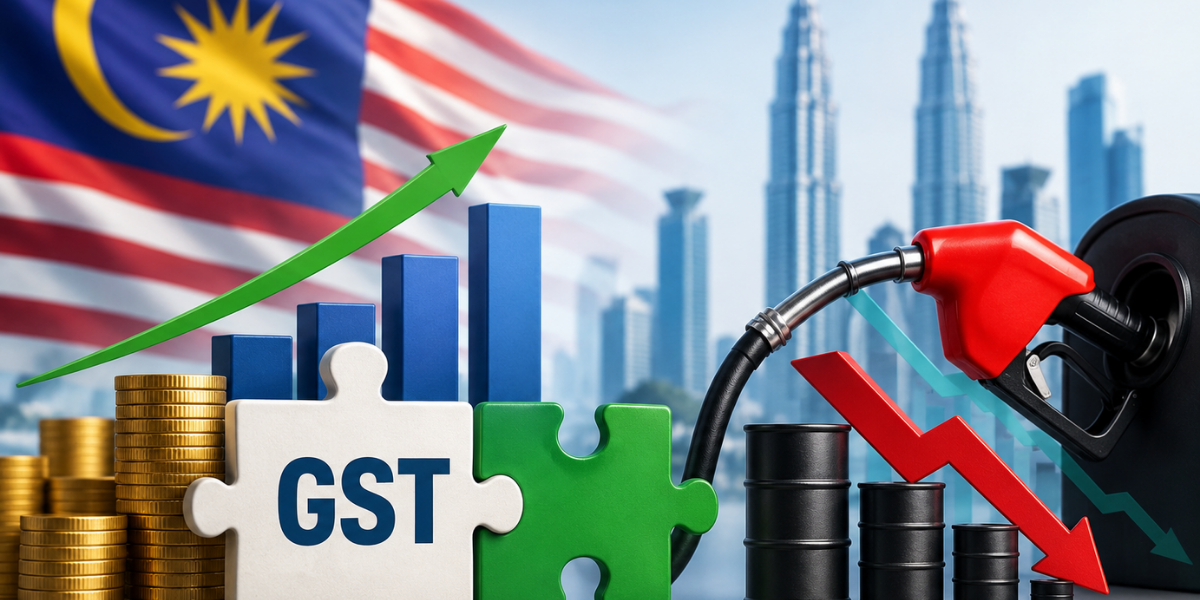

The Organisation for Economic Co-operation and Development (OECD) has recommended that Malaysia GST be reintroduced and fuel subsidies gradually phased out to strengthen the country’s public finances as it approaches high-income status, according to a report by Malay Mail. The recommendations were outlined in the OECD’s latest Economic Survey of Malaysia, released on July 28 in Kuala Lumpur.
The Paris-based organisation said mounting spending needs in social protection, education and an ageing population would require a stronger and broader tax base. It recommended that the government mobilise additional revenue by reintroducing the Goods and Services Tax, broadening the personal income tax base and strengthening tax administration, while cushioning lower-income households through targeted cash transfers.
The survey was presented by Dr Luiz de Mello, director of the OECD’s Country Studies Branch in the Economics Department, at the report’s launch. The event was officiated by Economy Minister Datuk Seri Akmal Nasrullah Mohd Nasir, with Deputy Secretary-General (Policy) at the Economy Ministry Zunika Mohamed also in attendance.
The OECD also called for Malaysia to continue phasing out fossil fuel subsidies, arguing that they place a heavy burden on public finances while discouraging efforts to reduce carbon emissions. “Mounting spending needs in social protection and education call for strengthening the fiscal revenue base,” the survey said, adding that the current scope of the sales and services tax “is not the most efficient way to collect taxes on goods and services.”
The report said there is room to reduce tax expenditures and tax more forms of personal income. It also recommended that Malaysia “move from subsidising fossil fuels towards a carbon pricing strategy, while protecting vulnerable households through targeted transfers.”
The recommendations come as the OECD projects Malaysia’s economy to remain resilient despite global uncertainties, forecasting GDP growth of 4.9 per cent this year and 5.0 per cent in 2027. Inflation is expected to remain relatively contained at 2.1 per cent this year, according to the survey.
However, the organisation warned that fiscal consolidation has been gradual and that public debt remains elevated, leaving the country vulnerable to external shocks, including higher energy prices. It said large and weakly targeted energy subsidies should be phased out, with the government’s social registry used to better target assistance to those who need it most.
The OECD said Malaysia’s tax revenue, at less than 13 per cent of GDP, remains comparatively low, and that a broad-based consumption tax would provide a more stable source of government revenue while aligning the country’s tax system with international best practices. The additional revenue, the report said, would help finance improvements in education, social protection and public investment as Malaysia prepares for an ageing population and seeks to avoid the middle-income trap.
Although Malaysia is on track to attain high-income status around 2028–2030, the OECD cautioned that fewer than half of Malaysians are likely to earn incomes above the high-income threshold by then, with average household incomes needing to roughly double for most Malaysians to reach that level. The report said productivity growth has slowed, education outcomes have deteriorated and social protection remains underdeveloped, requiring policy reforms that go beyond headline economic growth.
Published periodically as part of the OECD’s Economic Surveys programme, the report provides an independent assessment of Malaysia’s economic performance and policy framework. It draws on economic data and consultations with government agencies and other stakeholders to evaluate the country’s outlook and offer policy recommendations on fiscal policy, productivity, education, investment and climate change.
The push for fiscal reform in Malaysia mirrors similar policy debates in other Asian economies navigating growth and revenue challenges, including recent discussion around China’s economic growth in 2026.

I am Rukaiya Kadiwala, an experienced News Content Writer with 6+ years of expertise in hospitality, travel, hotel, restaurant, business, and lifestyle news. Skilled in writing, research, fact-checking, headline creation, and digital publishing, I create accurate, engaging, and high-quality content that informs and attracts readers worldwide.