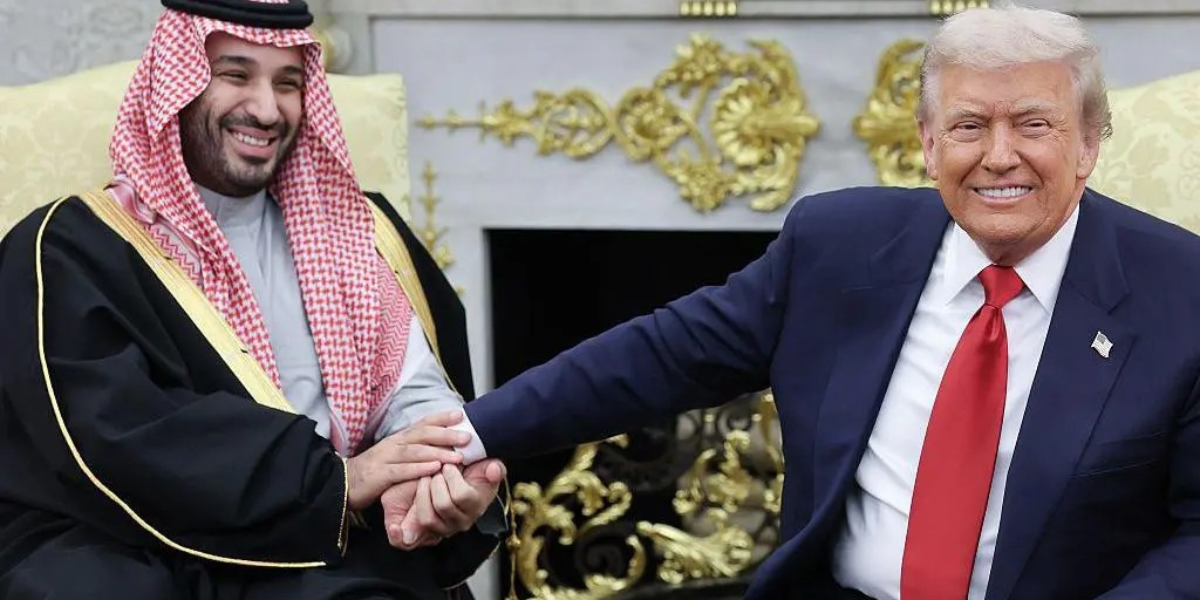
The United States and Saudi Arabia have reached a civilian nuclear cooperation agreement, the US Department of Energy announced, as part of an effort to deepen ties between Washington and Riyadh. The US-Saudi nuclear deal was announced on Wednesday, with the Department calling it “historic” and stating that American companies will supply nuclear technology to the kingdom. The agreement is expected to be submitted to Congress for review, according to the Department’s statement.
The deal consists of an accord under Section 123 of the Atomic Energy Act of 1954, commonly known as a 123 agreement, along with an accompanying bilateral safeguards agreement, the Department of Energy said. US Energy Secretary Chris Wright said in the statement that the agreements reflect a shared commitment between the two nations to strengthening commercial relations and delivering prosperity and security to allies. Wright added that the agreements would uphold nuclear safety and nonproliferation standards while relying on US-designed technology.
Some US media reports have suggested the deal could allow Saudi Arabia to enrich uranium domestically rather than import nuclear fuel from the United States, according to Al Jazeera. The Department of Energy’s statement did not provide details on enrichment provisions, and this aspect of the agreement has not been independently confirmed. Al Jazeera reported that if such reports are confirmed, the arrangement is likely to face opposition in Washington.
The Trump administration described the deal as a “decades-long, multi-billion-dollar partnership” that will create jobs in the US and reinforce global nonproliferation standards, according to the Department of Energy statement. The Nuclear Non-Proliferation Treaty does not prohibit uranium enrichment, though highly enriched uranium can be used to produce nuclear weapons, Al Jazeera noted. Israel is widely believed to be the only country in the region possessing a nuclear arsenal, though it has not officially confirmed this.
The announcement has drawn criticism from some commentators. In an opinion piece for The Guardian, columnist Kenneth Roth argued that the deal grants Saudi Arabia nuclear options that the Trump administration has said it would never allow Iran to have, and suggested the agreement is less restrictive than a 2009 US nuclear cooperation deal with the United Arab Emirates. Roth’s column represents his own analysis and is not a statement from the US or Saudi governments.
The agreement also comes at a time when energy security and nuclear technology have become increasingly important parts of US-Saudi relations. Saudi Arabia has been seeking to expand its energy sector and diversify its economy beyond oil under its broader economic development plans. Civilian nuclear power could potentially contribute to the kingdom’s long-term electricity needs while supporting the development of new industrial and technological capabilities. For the United States, the agreement could create opportunities for American nuclear companies and strengthen economic ties with one of the Middle East’s most influential economies.
However, the nuclear partnership is also likely to receive close scrutiny from lawmakers and nonproliferation experts. Any future arrangements involving uranium enrichment, nuclear fuel production or safeguards could become a major point of discussion during the congressional review process. Supporters of the agreement are expected to highlight its potential economic benefits and the importance of maintaining close strategic relations with Riyadh, while critics may seek stronger guarantees to prevent the misuse of civilian nuclear technology. The final terms and implementation of the agreement will therefore be closely watched in Washington and across the Middle East.
Further details on the US-Saudi nuclear deal, including its formal submission to Congress, are expected in the coming weeks. Official updates on the agreement are available through the US Department of Energy’s official website. In related political coverage, StudioX News has also reported on other major international developments this week, including the Labor National Conference 2026 in Adelaide.

I am Rukaiya Kadiwala, an experienced News Content Writer with 6+ years of expertise in hospitality, travel, hotel, restaurant, business, and lifestyle news. Skilled in writing, research, fact-checking, headline creation, and digital publishing, I create accurate, engaging, and high-quality content that informs and attracts readers worldwide.