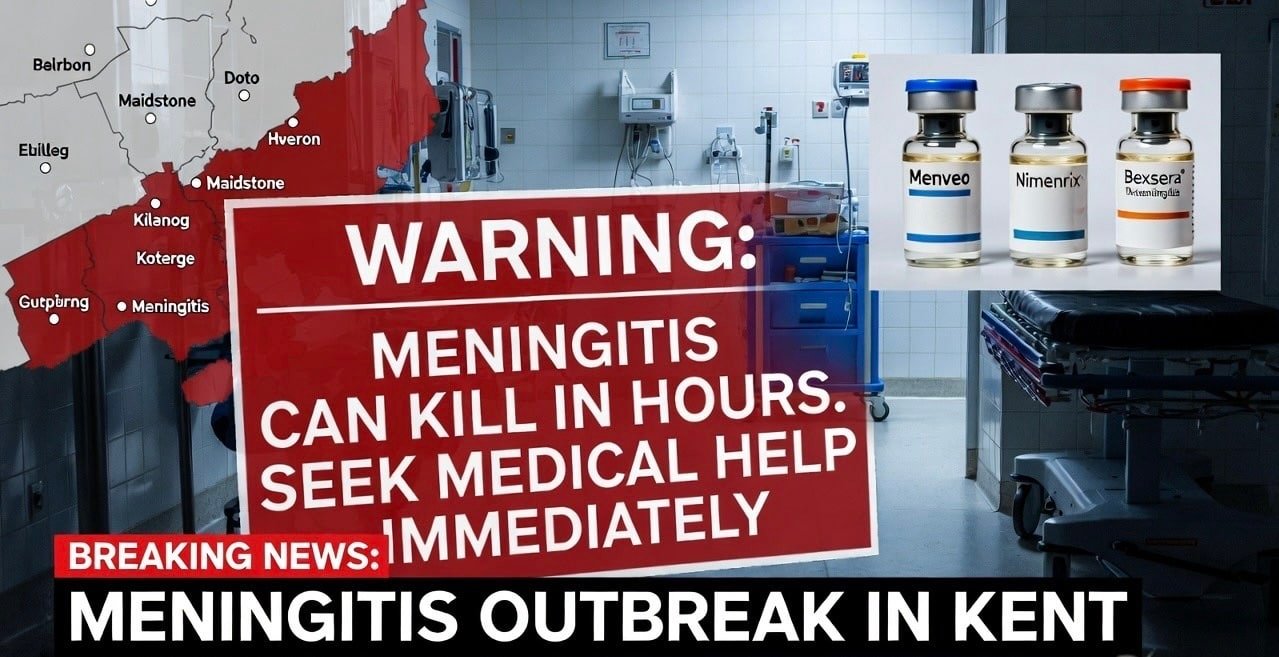
Authorities in Kent, United Kingdom are responding to a serious and fast-moving meningitis B outbreak that has claimed two lives and infected at least 15 people, prompting one of the largest emergency vaccination campaigns the region has seen in recent memory. The outbreak has been linked to a nightclub in Canterbury, a historic cathedral city in southeast England, and has sent shockwaves through local communities, universities, and public health agencies across the country.
What Happened and What Is Being Done
Health officials confirmed that the Canterbury nightclub at the centre of the outbreak has been closed as a precautionary measure while investigations continue. In an urgent response, authorities distributed prophylactic antibiotics to thousands of individuals believed to have attended the venue during the relevant period. A mass vaccination programme has since been launched, targeting approximately 30,000 residents, with a particular focus on university students and young people who are statistically more vulnerable to meningococcal disease due to close living conditions in dormitories and shared accommodations.
Among those who have died are a university student and a teenager, deaths that have underscored the devastating speed at which meningitis B can progress. UK Health Security Agency officials have described the scale of the outbreak as unprecedented for the region, and health authorities are urging anyone who received a meningitis B vaccine in childhood or adolescence to seek a booster dose.
Understanding Meningitis B
Meningitis B is caused by the bacterium Neisseria meningitidis type B and is one of the most serious forms of bacterial meningitis. It can progress from initial flu-like symptoms — including fever, headache, and fatigue — to life-threatening complications within 24 hours. More advanced symptoms include a stiff neck, sensitivity to light, a distinctive non-blanching skin rash, and in severe cases, seizures, organ failure, and septicaemia. Even among those who survive, lasting complications such as hearing loss, brain damage, and limb amputations due to tissue damage are not uncommon. According to Meningitis Research Foundation data, bacterial meningitis carries a fatality rate of approximately 10%, and roughly one in five survivors experiences long-term disability.
Young adults between the ages of 15 and 24, along with infants under the age of one, are considered the highest-risk groups for meningitis B infection. Social environments such as university campuses and nightclubs — where individuals are in close contact and respiratory droplets spread easily — are known to accelerate transmission.
Canadian Context: What This Means for Canadians
While this outbreak is centred in the United Kingdom, it carries important implications for Canadians. Thousands of Canadian students study abroad in the UK each year, and many travel to destinations like Canterbury and London. Canadians currently in the UK, or planning to travel there, are advised to monitor their health closely and consult a travel health clinic before departure. Back home, vaccination schedules across Canadian provinces vary. While some provinces include meningococcal vaccines in their publicly funded immunization programs, coverage for the specific meningitis B strain — known as Men B — is inconsistent. Parents and young adults are encouraged to speak with their healthcare provider about whether a Men B vaccine, such as Bexsero or Trumenba, is appropriate for them. Canadian post-secondary students living in residence are particularly advised to review their vaccination history.
Health experts globally are pointing to this outbreak as a stark reminder of the gaps that still exist in meningitis vaccination coverage, and the particular risks posed by high-density social settings like nightclubs and university residences. Nightlife venues present unique public health challenges, as attendees are often anonymous and difficult to trace in the event of an exposure alert.
Travelers returning from the Kent and Canterbury area who develop symptoms resembling meningitis — including sudden high fever, severe headache, a stiff neck, or an unusual rash — should seek emergency medical attention immediately and inform healthcare providers of their recent travel history. Time is critical when it comes to bacterial meningitis, and early treatment with antibiotics can be life-saving. StudioX Health will continue to provide live updates as this situation develops.

Harnaik Singh Rathor is the Founder, Publisher, and Editor-in-Chief of StudioX News Canada, Canada's multilingual digital news network serving diaspora communities across 44 languages. With a background in media production, public relations, and multicultural communications, he founded StudioX Film and TV Corporation to bridge the gap between mainstream Canadian media and the country's diverse immigrant communities. He is a member of the Canadian Association of Journalists (CAJ), RTDNA Canada, CPRS Vancouver, NEPMCC, and the Canadian Freelance Union (Unifor). Based in Surrey, British Columbia. | LinkedIn: https://www.linkedin.com/in/harnaiksinghrathor/ | Muck Rack: https://muckrack.com/harnaiksinghrathor | Email: editor@studioxnews.ca